Polestar and Nordic 'Just‑Right' Aesthetics: Lagom and Form Follows Function
At the intersection of Nordic design and electrification, Polestar advances an 'understated yet powerful' aesthetic.
Why this matters now
In the Nordic context, design is rarely mere decoration; it is a way to relate to the world. Polestar's language embodies a contemporary "quiet strength": clean surfacing without gratuitous muscularity; a cockpit that is lightweight and legible, led by information density and interaction logic instead of visual gimmicks. This restraint is not indifference—it's the consequence of two long-standing philosophies: the Swedish idea of Lagom (not too little, not too much), and the modernist maxim form follows function.
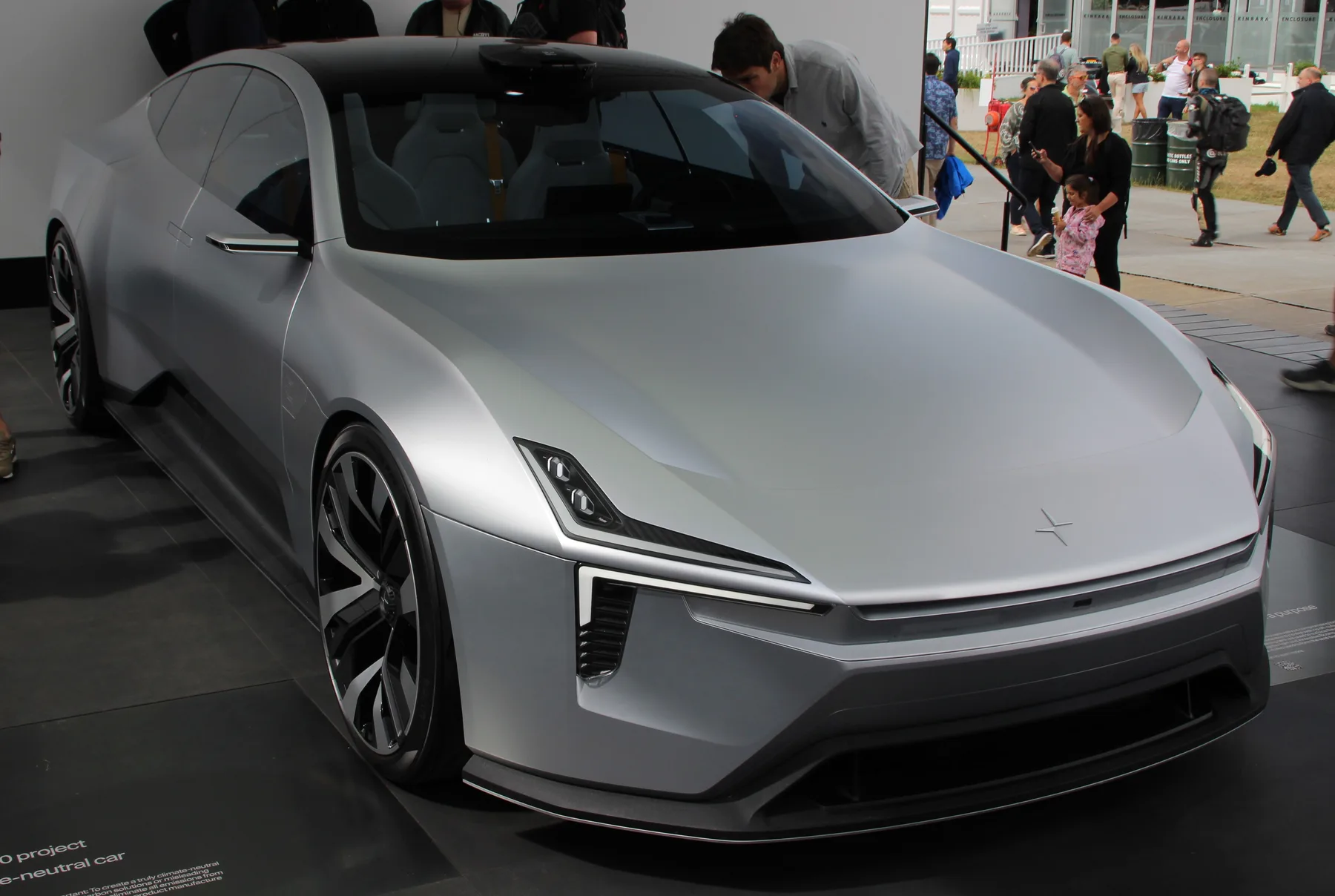
Polestar Precept (2021) photographed by MrWalkr at Goodwood Festival of Speed 2022. Licensed CC BY-SA 4.0 via Wikimedia Commons.
Lagom: the 'just‑right' overlap of design and life
Lagom is often translated as "moderation," but it behaves more like a method for living:
- Spatially: avoid redundant volume and visual noise so attention naturally settles on what matters.
- Materially: choose honesty and tactility—win by durability and comfort, not by looking expensive.
- Interaction-wise: respect attention—surface information when needed, then get out of the way.
This aligns with the driving flow-state: a good cockpit dissolves its own presence so you can attend to the road and the subtle gradients of sound and speed. From macro volume to button feel to soft light diffusion, Polestar practices Lagom: nothing is excessive, yet every needed detail is here.
Real refinement often comes from subtraction—removing unneeded complexity and short-term thrills, leaving long-term order and calm.
Form follows function: honest expression from electrification
Form follows function doesn't deny beauty; it argues that beauty appears when function is expressed honestly. For an EV-first architecture, that means:
- Surfaces serve aerodynamics and energy management, prioritizing drag reduction over ornamental musculature.
- Lighting signatures act as identity while every cut surface respects optics, manufacturing tolerances, and efficiency.
- In-cabin information architecture follows perceive–decide–act: critical actions live on short, predictable paths; secondary features sit in secondary layers; motion supports logic rather than concealing it.
You get an engineering-forward beauty: dimensions, ratios, sections, gaps, and processes negotiating with one another. It's not cold rationalism; it's using rational structure as a bridge to longevity and quiet character.
Material honesty: sustainability you can feel
Nordic "honesty" often shows up in materials. Polestar's textiles, foams, and trims favor quiet textures with subtle layering. Recycled fibers, vegan leathers, and open-pore structures deliver combined tactile and acoustic gains—absorbing high-frequency noise, softening reflections, and aging gracefully. What you feel isn't a luxury costume; it's verifiable durability, traceable sourcing, and palpable quiet.
Choosing materials is choosing how time will mark the object—good materials capture patina rather than wear.
Light, texture, silence: the third axis of emotion
Great cabins never rely on screens alone. The incidence angle of light, the way textures diffuse it, and the proportion of blacks and neutrals create a third axis of emotion. Electric drivetrains are inherently quieter; Polestar treats "silence" as a design parameter:
- Noise treated as a "material" across laminated glass, isolation structures, and absorptive textiles.
- Visual contrast tuned away from harshness to reduce long-drive eye strain.
- Tactile latency of buttons/knobs damped for confirmability without intrusion.
You enter a form carved by function, then perceive a kindness in how light and sound are managed.
Interface discipline: getting 'less' right is harder than doing 'more'
Simplicity is not "subtractionism"; it's structural thinking. Polestar's UI emphasizes:
- Hierarchy: critical states (speed, range, next turn) live nearest to the focal path.
- Semantic consistency: icons and wording reuse the same grammar across modules.
- Motion with purpose: animation explains transitions; it never replaces logic.
- Clear input roles: time‑critical, high‑frequency actions retain physical touchpoints; complex, non‑urgent commands go to voice and touch.
It's neither "all capacitive is the future" nor "all physical is better"—it's the right division of labor for low learning cost and low error rates. Do less, do it right.
From product to life: Lagom as a transferable method
Treat Lagom and form follows function as methods and they generalize:
- Workflows: spend attention on the smallest set of decisive steps.
- Living: reduce disposables; prefer maintainable and repairable objects.
- Travel: optimize for the quality of path, not the quantity of check‑ins.
No surprise Polestar's aesthetic resonates with engineers, researchers, and designers alike—it resists short‑term trendiness and supports a more holdable way of living: explainable, maintainable, sustainable.
Closing: quiet, yet strong
"Quiet" is not compromise—it's letting time speak. Lagom keeps products from dissipating in time; form follows function keeps structures standing. As electrification expands the engineering space of the automobile, Polestar shows—Nordically—that:
Good design doesn't gift‑wrap function like a present—
it crafts structure like a poem.